
What is Emergency Lighting Testing? (UK Requirements Explained)

If you’re responsible for building safety, understanding what is emergency light testing is absolutely essential. In simple terms, emergency lighting testing is the process of checking whether your emergency lighting system works properly during a power failure. These systems are designed to guide people safely out of a building during emergencies like fire or electrical faults.
In the UK, emergency lighting testing is not optional it’s a legal requirement. Whether you manage an office, commercial property, or rental building, you must ensure your system meets emergency lighting testing requirements UK standards. In this guide, we’ll break everything down in a simple, practical way so you can fully understand your responsibilities.
What is Emergency Lighting Testing and Why It Matters
So, what is emergency light testing really about?
It’s not just turning lights on and off. It’s a structured process that ensures:
Emergency lights activate when power fails
Batteries hold enough charge
Escape routes remain clearly visible
The system complies with UK regulations
Without proper testing, your system could fail when it’s needed most—which can put lives at risk and lead to legal consequences.
What Are Emergency Lighting Testing Requirements UK?
The emergency lighting testing requirements UK are mainly based on:
BS 5266 (Emergency lighting standard)
Regulatory Reform (Fire Safety) Order 2005
Workplace safety regulations
These rules state that building owners or responsible persons must:
Regularly test emergency lighting
Maintain proper records
Fix faults immediately
Ensure systems are always operational
To better understand your legal duties, you can go to official UK fire safety guidance, which explains how emergency systems must be maintained to keep buildings safe.
Types of Emergency Lighting Tests
Emergency lighting testing is not just one task it involves different types of checks.
1. Monthly Function Test
Simulates power failure
Checks if lights turn on
Short duration (a few seconds)
2. Annual Full Duration Test
Runs system for full duration (usually 3 hours)
Tests battery performance
Ensures full compliance
3. Visual Inspections
Check for damage
Ensure lights are clean
Confirm indicators are working
How Often Should Emergency Lighting Be Tested?
Understanding testing frequency is key to compliance.
Monthly → Quick functional test
Annually → Full system test
Ongoing → Maintenance checks
If you want a deeper understanding of testing schedules, you should also check our guide on Emergency Lighting Test Frequency, which explains everything in detail.
Common Mistakes in Emergency Lighting Testing
Many businesses fail compliance due to simple mistakes:
Not testing regularly
Skipping record keeping
Ignoring faulty lights
Delaying repairs
Avoiding these mistakes will save you from penalties and safety risks.
Emergency Lighting Maintenance & Inspection
Testing alone is not enough—proper maintenance is equally important.
Regular emergency lighting maintenance includes:
Battery replacement
Cleaning fittings
Checking wiring
Fixing faults immediately
You can also explore our detailed guide on Emergency Lighting Maintenance & Inspection to understand long-term system care.
What Happens During an Annual Emergency Lighting Inspection?
An annual inspection is a detailed process carried out by professionals.
It includes:
Full duration testing
Battery and component checks
Compliance verification
Certification
After inspection, you’ll receive documentation confirming your system meets UK standards.
UK Government Guidance on Electrical Safety
To stay compliant with emergency lighting testing requirements UK, you should always follow official government guidance.
If you need expert help, especially for commercial properties, it’s always better to go with professionals visit here emergency lighting testing west london.
For official guidance, building owners and responsible persons should follow recommendations from UK government fire safety regulations, which outline responsibilities for maintaining safe escape routes and emergency systems.
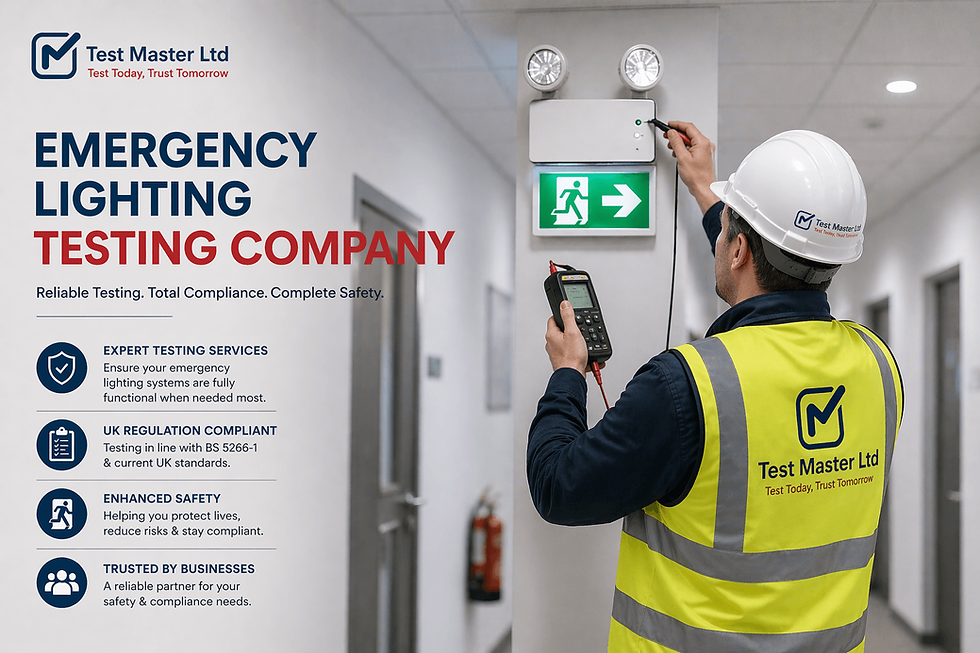
Role of Test Master Ltd in Emergency Lighting Testing
Professional services make a huge difference when it comes to compliance.
Test Master Ltd provides:
Accurate testing
Full inspection
Certification
Compliance support
With experienced engineers and proper tools, Test Master Ltd ensures your building meets all legal standards without stress.
If you want peace of mind, working with Test Master Ltd is always a smart choice.
Why Professional Testing is Important
While basic checks can be done internally, professional testing ensures:
No hidden faults
Proper documentation
Full legal compliance
This is especially important for commercial and high-risk buildings.
We also provide other services such as Pat Testing, EICR Certificate & Fire Alarm Testing. If you need these services anywhere in West London, you can contact Test Master Ltd.
FAQ
1. What is emergency lighting testing?
Emergency lighting testing is the process of checking whether emergency lights work properly during power failure.
2. What are emergency lighting testing requirements UK?
They include regular monthly and annual testing, maintenance, and proper documentation as per BS 5266 and fire safety laws.
3. How often should emergency lighting be tested?
Monthly function tests and annual full-duration tests are required in the UK.
4. Who is responsible for emergency lighting testing?
The building owner, landlord, or responsible person is legally responsible.
5. Do I need a certificate after testing?
Yes, after annual testing, you should receive a compliance certificate.
Final Thoughts
Now you clearly understand what is emergency light testing and why it’s so important. It’s not just a technical task it’s a legal and safety requirement that protects lives.
By following emergency lighting testing requirements UK, maintaining your system properly, and using professional services when needed, you can ensure your building is always safe and compliant.


Comments