
Emergency Lighting Design: Complete Guide for Safe & Compliant Systems

If you’re planning a building or upgrading safety systems, understanding emergency lighting design is absolutely essential. A properly planned emergency lighting design ensures that people can safely evacuate a building during power failures, fires, or emergencies. In the UK, this is not just best practice it’s a legal requirement.
Emergency lighting design goes beyond simply installing lights. It involves strategic placement, correct illumination levels, proper system selection, and full compliance with UK regulations.
In this guide, you’ll learn everything you need to know about designing an effective and compliant emergency lighting system.
What is Emergency Lighting Design?
Emergency lighting design refers to the planning and layout of emergency lighting systems to ensure safe evacuation during emergencies.
It includes:
Identifying escape routes
Placing lighting fixtures strategically
Ensuring proper brightness levels
Meeting UK compliance standards
A well-designed system ensures that occupants can clearly see exit paths and avoid hazards during emergencies.
Why Emergency Lighting Design is Important
A poor design can make even a well-installed system ineffective.
Proper emergency lighting design ensures:
Clear visibility of escape routes
Reduced panic during emergencies
Safe movement in low-light conditions
Compliance with UK regulations
Without proper design, lights may not cover critical areas, creating serious safety risks.
Key Principles of Emergency Lighting Design
Designing an effective system requires following certain principles.
1. Coverage of Escape Routes
All escape paths must be clearly illuminated.
2. Open Area Lighting
Large spaces must have sufficient lighting to prevent panic.
3. High-Risk Task Areas
Areas with machinery or hazards require higher illumination.
4. Exit Sign Visibility
Exit signs must be clearly visible from all angles.
If you’re not sure whether your current system is designed correctly or meets UK standards, it’s always best to get expert help. If you need this service anywhere in west london area, you can visit emergency lighting testing west london for professional inspection and compliance support.
Emergency Lighting Design Requirements UK
In the UK, emergency lighting design must follow strict standards.
These include:
BS 5266 guidelines
Fire Safety Order 2005
Workplace safety regulations
Key requirements:
Minimum illumination levels
Proper spacing between lights
Automatic operation during power failure
Reliable battery backup
Types of Emergency Lighting in Design
Understanding different system types is crucial for proper design.
Maintained Lighting
Always on
Used in public buildings
Non-Maintained Lighting
Only activates during emergencies
Combined Systems
A mix of both types
Emergency Lighting Installation Connection
Design and installation go hand in hand. A good design ensures smooth installation.
To understand how systems are installed, you can explore Emergency Lighting Installation, which explains the full setup process.
Emergency Lighting Wiring Diagram Role
Wiring plays a key role in design.
A proper Emergency Lighting Wiring Diagram ensures:
Correct electrical connections
Safe system operation
Easy maintenance
Emergency Lighting Test Frequency
After design and installation, testing ensures reliability.
You can learn more about schedules in Emergency Lighting Test Frequency, which explains how often systems should be checked.
UK Government Guidance on Emergency Lighting
To ensure compliance, always follow official UK guidance.
Government fire safety regulations clearly state that emergency lighting must be properly designed to support safe evacuation.
Additionally, the Health and Safety Executive provides guidance on workplace electrical safety, ensuring systems like emergency lighting are correctly designed and maintained.
If you want to make sure your emergency lighting design is fully compliant and
professionally handled, you can check emergency lighting testing west london for expert services and support.
Common Emergency Lighting Design Mistakes
Avoid these common issues:
Poor placement of lights
Insufficient brightness
Ignoring high-risk areas
Not following regulations
These mistakes can lead to system failure during emergencies.
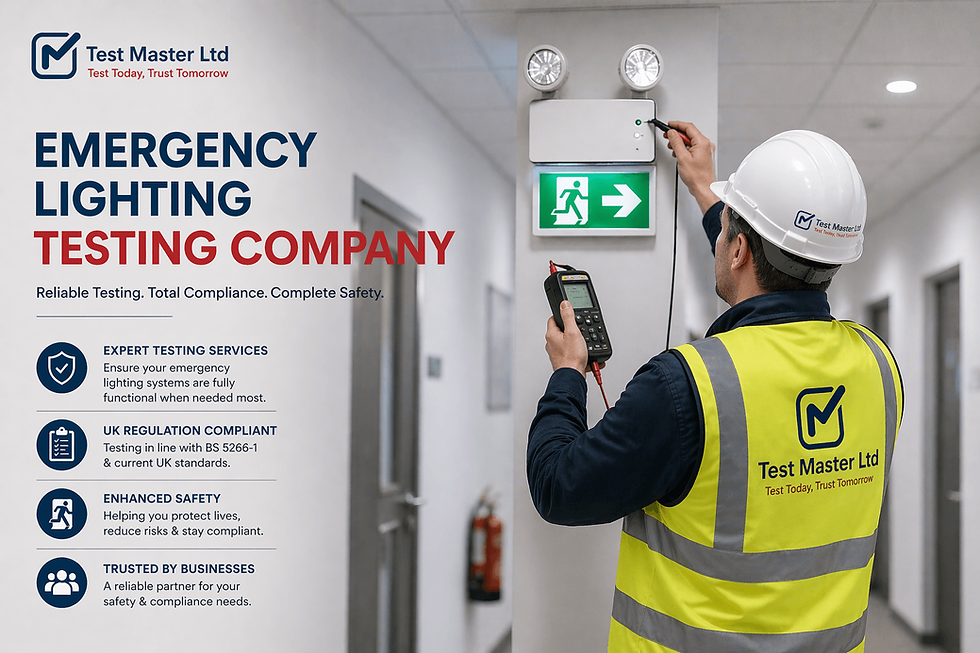
Role of Test Master Ltd in Design & Compliance
Designing a compliant system requires expertise.
Test Master Ltd provides:
Professional system design
Testing and inspection
Compliance checks
Ongoing support
With experienced engineers, Test Master UK ensures your system meets all UK standards.
Choosing Test Master Ltd means your system is designed correctly from the start.
Benefits of Proper Emergency Lighting Design
A well-planned emergency lighting design ensures:
Full safety compliance
Reliable performance
Better evacuation efficiency
Reduced risk
It’s one of the most important investments in building safety.
FAQ
1. What is emergency lighting design?
It is the process of planning and placing emergency lighting systems for safe evacuation.
2. Is emergency lighting design required in the UK?
Yes, it is a legal requirement under UK safety regulations.
3. What standards apply to emergency lighting design?
BS 5266 and fire safety regulations are the main standards.
4. Can I design emergency lighting myself?
It’s recommended to use professionals to ensure compliance and safety.
5. Why is proper design important?
It ensures lights cover all critical areas and function effectively during emergencies.
Final Thoughts
Emergency lighting design is the foundation of a safe building. Without proper planning, even the best equipment can fail when it matters most.
By following UK regulations, understanding design principles, and working with professionals, you can ensure your system is always ready in an emergency.
We also provide other services such as Pat Testing, EICR Certificate & Fire Alarm Testing. If you need these services anywhere in West London, you can contact Test Master Ltd.


Comments